The landlord's blog Getting people in
Tribute Act Night in a Pub: Real Costs and How to Fill It
What a tribute act really costs a pub (£150 to £4,800, most around £750), the 11pm licence line, the space and sound you need, and the sums before you book.
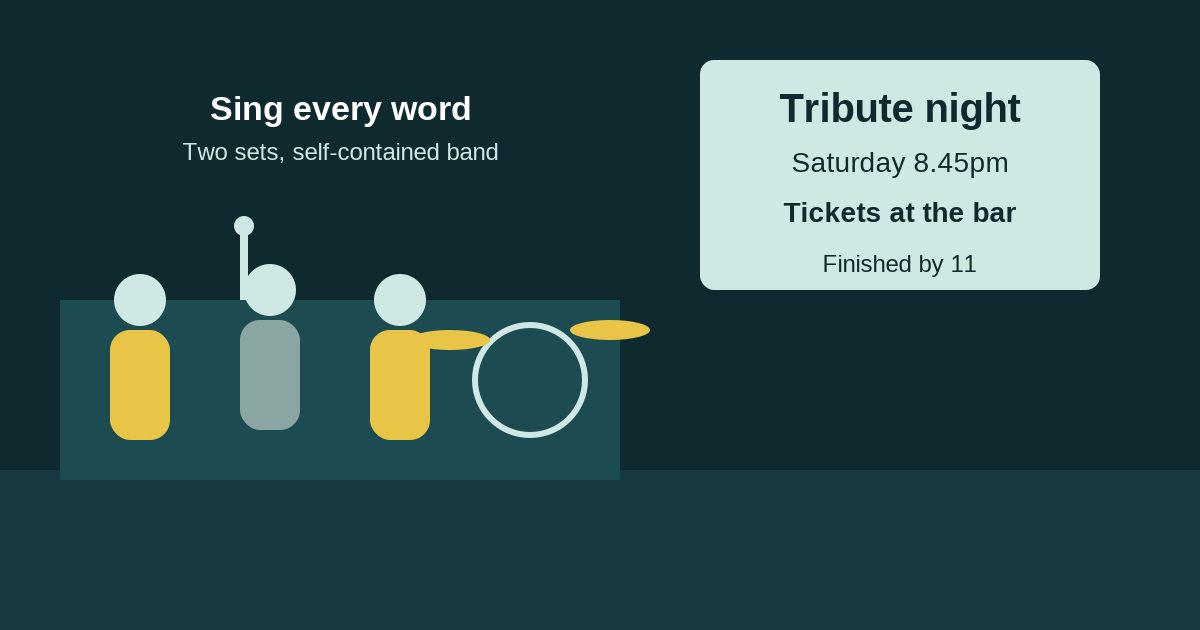
A good tribute act night is one of the few nights a pub can sell weeks ahead. People don't come for "live music". They come for the songs they already know, sung by somebody who looks the part, with their mates, and they buy the ticket because they're scared of missing it.
A bad one is a £900 act playing to 30 people who came in for a quiet pint.
This guide is how to book a tribute act for a pub and actually fill the room: what acts cost in 2026, how to tell a good one from a bad one, the space and sound they need, the licensing, the money sums and the jobs on the night. Sources are at the bottom.
The short answer
- Budget £500 to £1,500 for a band, less for a solo act. One big directory says the average professional tribute band is £750. Solo singers with backing tracks can start from £150 to £300.
- Most good bands are self-contained. They bring their own PA, mics, instruments and lights, and usually play two sets of 45 to 60 minutes.
- Finish by 11pm and you usually need no entertainment licence in England and Wales (alcohol licensed premises, audience up to 500). You still need TheMusicLicence.
- Sell tickets. A tribute night is an event, not background music. Tickets tell you who's coming and pay the act before a pint is poured.
- Pick an act your regulars would argue about. The right band for your crowd beats the "best" band on the website every time.
Why tribute nights work now
Big gigs have got dear. A survey by the Night Time Industries Association, reported in the Yorkshire Post, found around a fifth of UK adults had been to a tribute show in the past 12 months, and more than two thirds agreed that seeing major acts live has got too expensive for them. Venue operators in the same piece said people spend more at the bar at tribute shows.
That's the pub's opening. The person who can't pay £100 for the real thing will happily pay a tenner to sing every word of the same songs ten minutes from home, and stay for a few more because nobody has to drive.
What a tribute act costs a pub
Prices vary a lot by act, size and distance. Here's what four of the big UK booking sites say, all checked in November 2026:
- Eventsense: most tribute bands cost between £500 and £1,500, with established acts charging more and long travel or extra kit adding to it.
- Last Minute Musicians: prices on its site run from about £280 to £3,540, with an average of £750.
- Gig Heaven: from £150, with an average of £750 for professional tribute bands. Solo impersonators usually cost less. Suppliers typically travel about 40 miles, and closer acts may charge less for travel.
- BookEntertainment: from £483 for solo acts up to £4,848 for full stage production shows.
So a fair rule for a normal pub:
- Solo tribute (one singer, backing tracks): roughly £150 to £500.
- Duo or small band: roughly £400 to £900.
- Full band with costumes and a show: roughly £750 to £1,500, more for the big-name shows.
The cheapest act on the list is rarely the bargain. A £250 Elvis who's 90 miles away and wants travel on top can cost more than a £400 one from down the road.
How to tell a good act from a bad one
Every act's page will say they're "the UK's number one". Here's how to actually check:
- Watch a full song, not the trailer. Booking sites tell you to watch the videos, check the costume and photos and read the reviews. Look for a live clip in a pub or club, not a studio promo with the sound polished.
- Ask for the full set list. Gig Heaven suggests asking for a full evening's list. You want the hits your crowd knows, not the album tracks only the band loves.
- Ask other landlords. A tribute act that's played three pubs near you will have a name, good or bad, in about one message.
- Go and see them. If they're on somewhere within half an hour, go. Ten minutes tells you more than any website: do they get people up, do they talk to the crowd, are they too loud for a room your size?
- Check what's included. Last Minute Musicians says professional tribute bands are usually self-contained with a full PA, mics, instruments and lights. Make sure yours is. "Bring your own PA" on a Saturday afternoon is a phone call you don't want.
Space, sound and power
This is where pub tribute nights go wrong, so sort it before you sign anything.
Space. Last Minute Musicians says a three-piece band needs roughly 3m by 3m, plus about 1m for each extra musician. So a four-piece wants a 3m by 4m corner. Measure yours. If it means moving two tables and the fruit machine, plan where they go.
Size of band for the room. The same site suggests a three or four-piece suits up to about 100 guests, and a four or five-piece suits 150 or more. In most pubs, a smaller act sounds better than a big one squeezed in.
Volume. If you have a sound limiter, tell the act what it's set at. Last Minute Musicians says most bands cope if it's 95dB or above, and you should flag anything lower in advance. If you've got neighbours, check your premises licence for any noise conditions too. Keep doors and windows shut during sets.
Power. Agree where they'll plug in. Two separate sockets near the stage, not an extension reel across the walkway to the toilets.
Between sets. Most bands play a playlist through their PA in the break. Ask, so your own music doesn't fight theirs.
Licensing and music licences
For most pubs this is simpler than people think. The full version is in our guide on how to book live music for a pub, but here's the tribute-night short version.
GOV.UK says live or recorded music needs no entertainment licence if it takes place between 8am and 11pm, at an alcohol on-licensed premises, with an audience of no more than 500. That covers almost every pub tribute night that finishes by 11pm. Anyone providing entertainment between 11pm and 8am needs it to be licensed, so if the band's second set runs to midnight, check your premises licence covers it, or look at a temporary event notice.
You still need a music licence. PPL PRS says, as an example updated in November 2026, a pub could put on live music at a one-off event for up to 100 people for £14.64 plus VAT. If you already hold TheMusicLicence, check whether live music is on it, and tell them about the night.
Tickets, pricing and selling it out
Sell tickets, even cheap ones. A £5 ticket turns "might come" into "coming". It also tells you how many staff to put on, how much to order in and whether you need to push harder.
What to charge. In the Yorkshire Post piece, a big venue group said tribute tickets typically cost £20 to £30 in its clubs. A pub isn't a club. In a pub, a lower price usually makes more sense, with the bar doing the heavy lifting: somewhere between free and £10 is a sensible range to test. Price against what's on round you.
How to sell them.
- Behind the bar, with a list and cash or card, for the regulars.
- An online ticket link for everyone else, shared in local groups.
- A Facebook event made four to six weeks ahead, with the act's best live clip in it.
- On the pub tellys, every night, from the day you book. The people already sitting in your pub are your best buyers.
Pick the date carefully. A Friday or Saturday sells easier. A tribute night on a quiet Thursday can work if it's a big act, but don't put your best act up against a big match on the telly.
The money: is it worth it?
Here's a worked example. It's not a promise, it's the sum to do before you book. Swap in your own numbers.
The act: a four-piece band at £750.
The tickets: 80 sold at £8 = £640.
So the tickets nearly cover the band on their own. The rest has to come from the bar.
The bar: say those 80 people spend £25 each across the night. That's £2,000 of extra takings compared with a normal Saturday with a lot fewer in. If you make about 60p in every pound on that (check your own GP), that's roughly £1,200 of gross profit, before extra staff.
The bad night: 35 tickets at £8 = £280. You're £470 down on the act before the bar starts. Even at £25 a head, 35 people bring about £525 of gross profit, so you've roughly broken even after the act, and lost money once you add staff.
That's why tickets matter. The rule I'd use: don't book a band you couldn't sell half the tickets for in the first fortnight. If you're struggling at the halfway mark, push it hard on social and the tellys, or move the date while you can.
Other ways pubs make it pay:
- Food deal with the ticket. "Pie and pea supper plus ticket, £15" fills the early part of the night.
- Split the risk. Some acts will take a lower fee plus a share of the door. Ask.
- Make it a regular. One tribute night a month, same Saturday, builds a crowd that books ahead.
Booking it properly
Get it in writing, even a WhatsApp message both sides agree to. Cover:
- Date, arrival time, sound check time and set times (for example 8.45pm to 9.45pm and 10pm to 10.55pm).
- The fee, what it includes (PA, lights, travel) and when you pay.
- The deposit. Gig Heaven, for example, takes a 10% booking fee to confirm, with the balance paid direct to the act by the due date. BookEntertainment lets you spread the balance up to three weeks before the event.
- Cancellation, both ways. What happens if they cancel, or if you do.
- Volume and your limiter level.
- Where they set up, where they park and where they get changed.
- Whether they need food and drinks, and how many.
- Public liability insurance. Ask for a copy.
On the night
- Set up early. Have the corner cleared before they arrive and someone on the bar who knows they're coming.
- Staff up for the break. The interval is often the busiest 15 minutes of the night. Get an extra pair of hands behind the bar for it.
- Talk to the crowd. Before the second set, mention the next event. That's the cheapest marketing you'll ever do.
- Pay before they leave. As agreed, no haggling.
- Count it the next day. Tickets, takings against the same night last month, food, staff. Write it down. After three tribute nights you'll know which acts and which nights earn their slot.
Frequently asked questions
How much does a tribute act cost for a pub?
Most tribute bands cost between £500 and £1,500, and two big UK booking sites put the average professional tribute band at about £750. Solo tribute singers with backing tracks can start from around £150 to £300. Travel and extra kit can add to it, so ask for the full price including travel.
Do I need a licence for a tribute act in my pub?
In England and Wales, live music at an alcohol licensed pub needs no entertainment licence between 8am and 11pm for an audience of up to 500. After 11pm you need it covered by your premises licence or a temporary event notice. You still need TheMusicLicence from PPL PRS.
How much should I charge for a tribute night?
In a pub, somewhere between free and about £10 is a sensible range, letting the bar do the rest. Big venues charge £20 to £30, but that's clubs with big acts. Selling even cheap tickets ahead tells you how many are coming and covers part of the fee.
How much space does a tribute band need?
One booking site says a three-piece band needs about 3m by 3m, plus about 1m for each extra musician. So a four-piece needs roughly 3m by 4m. Measure the corner before you book.
How long does a tribute act play for?
Most tribute bands play two sets of 45 to 60 minutes, about two hours of music in total, with a playlist in the break. Agree the exact set times in writing so the second set finishes before 11pm.
Sources
- Eventsense: Book tribute bands
- Last Minute Musicians: Tribute bands for hire
- Gig Heaven: Hire tribute bands in the United Kingdom
- BookEntertainment: Tribute acts and tribute bands UK
- Yorkshire Post: Why fans are turning to tribute acts of their favourite bands
- GOV.UK: Entertainment Licensing
- PPL PRS: Music licence cost examples
We checked every source on 24 November 2026. Rules change, so check the latest version before you act. Nothing here is legal advice.