The landlord's blog Getting people in
How to Run a Murder Mystery Night in a Pub: Costs and Timings
Actors from about £345, or do it yourself for under £80. The 3 ways to run a pub murder mystery, the script licence most pubs miss, and a running order.
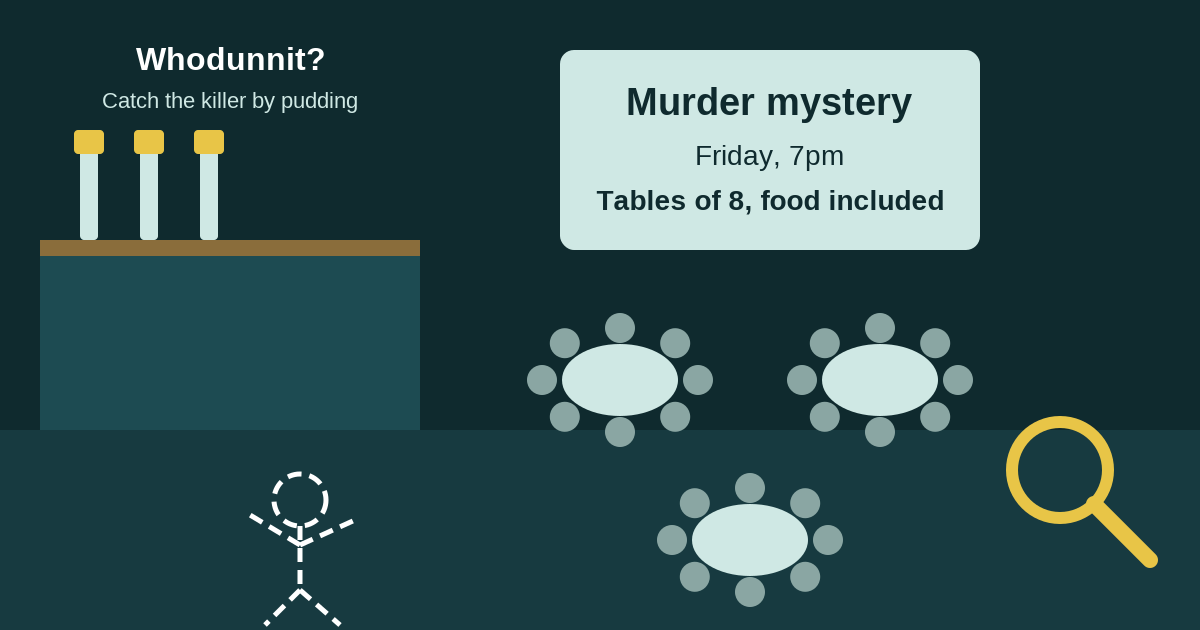
A murder mystery night is one of the few events that fills a pub with people who book, pay up front, eat a meal and stay all evening. It's sold by the table, it works on a dead January Friday, and nobody needs to be any good at quizzes or darts to enjoy it.
It's also easy to get wrong. Book actors who don't suit a pub crowd, price it badly, or buy a script that doesn't let you sell tickets, and you can lose money on a full room. This guide covers the three ways to run a murder mystery night in a pub, what each costs, the licence most pubs miss, a running order you can copy and the sums. Sources are at the bottom.
The short answer
- Three ways to do it. Hire a murder mystery company (from about £345 to £400 for a small show, with an average booking around £1,159 on one big agency site), buy a kit and run it yourself (under £80 with a commercial licence), or let a charity or club run it and hire your room.
- The licence most pubs miss isn't from the council. It's the script. Many kits sold for home parties don't cover a pub selling tickets. Buy a commercial or performance licence.
- The council side is simple. GOV.UK says a performance of a play needs no entertainment licence between 8am and 11pm for an audience of up to 500. Finish before 11pm.
- Sell it by the table. Tables of eight, tickets only, food included, paid up front.
- Build the night round the food. Clues and questions between courses, the reveal with coffee.
- Aim for 40 to 80 people. One popular format is written for 12 to 80 guests.
Is a murder mystery right for your pub?
It suits pubs with a room that can seat everyone at tables and still leave a space for the "action", whether that's a function room, a dining room or the lounge on a night you close it off. PTA UK's guide to running one puts it simply: you need room for guests to sit round tables as well as a performance area.
It suits a food pub best. The modern format started with murder mystery weekends in UK hotels in the early 1980s, so people expect to eat.
It fills nights you'd otherwise struggle with: three hours, 7pm to 10pm, with people who've paid before they walk in. If you're looking for ideas for the dead weeks after Christmas, our guide to January in a pub has more.
It's not for every crowd. Drinkers watching the football won't want the room going quiet for an inspector's speech, so use a separate room.
The three ways to run it
1. Hire a murder mystery company
This is the easiest and the dearest. A company sends actors, brings the plot, runs the night and hands out the prizes. Your job is the room, the food and the bar.
What it costs, from the companies' own pages:
- One company on the events site Eventsense quotes from £395 for a murder mystery dinner with four professional actors playing the suspects, within 30 miles of its base. Travel and accommodation are extra further away. It also says the actors need dinner provided and a private room to change in and keep their things.
- On the agency site Poptop, one husband-and-wife team lists services from £345. The same site says hiring a murder mystery act typically costs around £1,159 per event, depending on how long it runs, how much the plot is changed for you and travel.
Things to agree in writing before you book:
- The fee, travel, and how many actors and guests it's for.
- Meals and a changing room for the actors.
- Round timings, so the kitchen can plan courses.
- Prizes, answer sheets and whether they use a microphone.
PTA UK says check reviews or ask around. You want actors who get everyone joining in, which matters more in a pub than a fancy plot.
2. Buy a kit and run it yourself
Cheapest, and fine if a couple of confident staff or regulars fancy a go. Two kinds of kit suit a pub:
- Hosted kits for big groups. One UK publisher, Red Herring Games, sells interactive mysteries designed for 12 to 80 guests. They're written so two people who know the plot can run the whole night "script in hand", with six members of the audience picked out on the night to play the suspects. Those six aren't told who the murderer is either, so they can still join in guessing.
- Improvised kits with character briefs. Lazy Bee Scripts sells a "Pub Mystery" pack, set in a pub, with eight characters, five stages of 10 to 15 minutes and about an hour of improvised play. There's no script to learn: the actors make up the dialogue from the plot and character briefs.
The licence most pubs miss
Here's the bit that catches pubs out. When you sell tickets, most publishers want a commercial or performance licence on top of the kit. The kit price alone usually covers a private party, not a business charging people to come in.
From the publishers' own pages:
- Lazy Bee Scripts charges a flat £20 for the pack and £30 for each live performance. You need a performance licence every time you run it.
- Freeform Games sells games from £15.99 to £41.99, plus a commercial licence from £37.99 (30 days) to £226.99 (five years) if you're running them for profit. You can run as many events as you like in that time, but you must name Freeform Games as the owner when you advertise. It says you don't need the commercial licence for a charity fundraiser.
- Red Herring Games says plainly that if you are the hotel, bar or restaurant, or related to the owner, you need to talk to them about a commercial licence. It's had venues use a charity label to get round the licence, so a pub running a "charity" night while keeping its usual profit won't get the charity discount. If you buy its commercial licence to run events for profit, it suggests your minimum hire fees should match its own.
So a do-it-yourself night with a Freeform game and a 30-day licence comes in under £80 before food. The Lazy Bee pub mystery comes in at £50 for one night. Read the licence terms before you sell a single ticket.
3. Let a charity or club run it
The third way: a charity, PTA or club organises the murder mystery and books your room. They sell the tickets, keep the ticket money for their cause, and you take the room hire (if you charge it), the food and the bar.
That's often the best first step. You find out if your customers like it without carrying the risk. PTA UK says hiring a specialist supplier is recommended for a school event, and that a local amateur dramatics group or drama students can be a cheaper option. Both of those are worth asking about locally if you run one yourself, too.
If they're selling tickets in your pub, ask who's buying the script licence. Red Herring's rules say an organiser who isn't connected to the venue, pays your full rate and gives the rest of the ticket money to the charity can use its charity discount, but a pub that keeps its normal margin can't.
Licensing: what the council side says
The good news is that the council side is simple for most pubs.
GOV.UK's entertainment licensing guidance says a licence is not required for a performance of a play if it takes place between 8am and 11pm and the audience is no more than 500 people. A murder mystery with actors is a performance of a play, and very few pubs will have 500 people at one.
What can catch you out:
- Running past 11pm. GOV.UK says anyone providing any entertainment between 11pm and 8am may need a licence. Build the night to finish by 10.30pm.
- Music. If you play music before, between rounds or after, that needs TheMusicLicence from PPL PRS. GOV.UK says live or recorded music in an alcohol-licensed pub between 8am and 11pm, with an audience up to 500, needs no entertainment licence, but the music licence is a separate thing. Our guide to booking live music for a pub explains both.
- Your licence conditions. Some premises licences have conditions about the room, numbers or times. Read yours.
This isn't legal advice. If you're not sure, ask your council's licensing team.
Pricing and selling tickets
Sell it as a meal and a show. Most people understand "£30 a head, two courses and a murder" better than a separate ticket and a food bill.
PTA UK's advice for any murder mystery is to sell tickets in advance, have a ticket-only policy on the door and make sure the price covers your costs and leaves a profit. It also suggests selling single tickets and tables of eight, so people bring their friends.
Some tips:
- Take the money up front. A table of eight that doesn't turn up is eight meals in the bin.
- Set a closing date for tickets a few days before, so the kitchen knows numbers.
- Ask for dietary needs and allergies when they book, not on the night.
- Theme the dress code. PTA UK suggests using the plot's theme, such as a 1920s gangster game, to set the dress code, with judges and a prize for the best outfit.
- Push it for weeks, not days. People need time to round up a table.
A running order you can copy
Red Herring Games publishes a sample running order for a three-course murder mystery dinner. Here it is, cut down for a pub:
- 7.00pm Guests arrive, drinks at the bar. The hosts pick out a few outgoing guests to play suspects and brief them. Red Herring says people rarely volunteer, so the hosts usually have to ask.
- 7.30pm A short scene introduces the murder, about seven minutes. Each table gets a crime scene photo and the first questions.
- 7.40pm Starters served, eaten and cleared.
- 8.00pm Round one: the inspector arrives and tables put their questions to the suspects.
- 8.15pm Main course. Evidence goes round the tables while people eat.
- 8.45pm Round two: another short scene and questions.
- 9.00pm Dessert. More evidence goes round.
- 9.20pm Round three: the last scene and questions. Answer sheets collected.
- 9.45pm Tea and coffee while the hosts check the answers.
- 10.00pm The reveal, prizes and photos.
That finishes by 10.15pm, well before 11pm. Two courses instead of three? Drop the starter and serve the main after round one.
Not everyone agrees on eating in the middle. Cases and Clues, who make murder mystery games, say a sit-down dinner mid-case kills momentum. If your kitchen is slow, serve the main before the murder and keep the pudding for the break.
On the night: what goes wrong and how to stop it
- The back table can't hear. This is the big one in a pub. Red Herring's packs include transcripts of the interviews to hand round when sound doesn't carry. Use a microphone if the actors are happy to.
- The kitchen holds up the plot. Agree the course times with the actors and stick to them. A late main course means a late finish.
- Nobody volunteers. Plan who'll play suspects with the hosts beforehand, or brief two or three regulars in advance.
- Prizes. PTA UK suggests a prize for the table that gets the murderer and the motive, plus best outfit. A bottle of fizz for the winning table and a bar tab for the best dressed is plenty. Our guide on prizes that bring people back has more ideas.
The sums: will it pay?
These are example numbers to show how it works. Use your own prices.
Hired actors, 48 guests (six tables of eight):
- Ticket £32 a head: £22 for two courses at your normal menu price, £10 for the show.
- Show money: 48 x £10 = £480.
- Actors: £395, plus their dinner (four meals at cost).
- So the show money covers the actors, and the food and the bar are priced as normal.
If only 30 turn up: 30 x £10 = £300 against a £395 booking. You're £95 down on the show before the food and drink. That's why you sell tickets up front and set a minimum number to go ahead.
Run it yourself, 40 guests:
- Kit and 30-day licence: about £80.
- Ticket £28 a head: £22 for the food, £6 for the show.
- Show money: 40 x £6 = £240 against £80 of kit.
- The 30-day licence also covers a second night that month if the first sells out.
The real money is the food and the drink: a full room, booked and paid, three hours on a night you'd have struggled to fill. If the first one sells out, run another next month. Christmas, Halloween and Valentine's all make good plots.
Frequently asked questions
How much does a murder mystery night cost for a pub?
Hiring actors starts from about £345 to £400 for a small show, plus travel and the actors' meals, and one agency site puts the average booking at around £1,159. Running it yourself with a kit and a commercial licence can cost under £80. Food and drink are on top, at your normal prices.
Do I need a licence to run a murder mystery night in my pub?
For the council, usually not. GOV.UK says a performance of a play needs no licence between 8am and 11pm for an audience of up to 500. But you'll usually need a commercial or performance licence from whoever wrote the script, and TheMusicLicence for any music.
How many people do you need for a murder mystery night?
It depends on the format. Some hosted kits are written for 12 to 80 guests. Scripted party kits, where every guest plays a character, typically need 6 to 10 players. In a pub, 40 to 80 at tables of eight works well.
How long does a murder mystery night last?
Plan for about three hours. A typical running order starts at 7pm, has three rounds of questions between courses and ends with the reveal at about 10pm.
Can I use a home murder mystery kit in my pub?
Usually not when you're selling tickets. Most publishers want a commercial or performance licence for paid events. Lazy Bee Scripts charges £30 a performance, and Freeform Games sells a commercial licence from £37.99 for 30 days.
Sources
- PTA UK: Step-by-step: murder mystery
- Red Herring Games: How to run an interactive murder mystery game
- Red Herring Games: Not for profit
- Lazy Bee Scripts: Pub Mystery by Sean Dooley
- Freeform Games: Commercial licence
- Poptop: Hire murder mystery party in the UK
- Eventsense: Murder Mystery Dinner for mid-size group, Murder Mystery UK
- Activity Superstore: How to host an unforgettable murder mystery evening
- Cases and Clues: How to host a murder mystery night at home
- GOV.UK: Entertainment Licensing
We checked every source on 23 November 2026. Rules change, so check the latest version before you act. Nothing here is legal advice.