The landlord's blog Getting people in
How to Run a Comedy Night in a Pub (Costs, Acts, Rules)
What comedians cost, how to lay the room out, why you need an interval, the licence you don't need and a worked 50-seat sum. A landlord's plain guide.
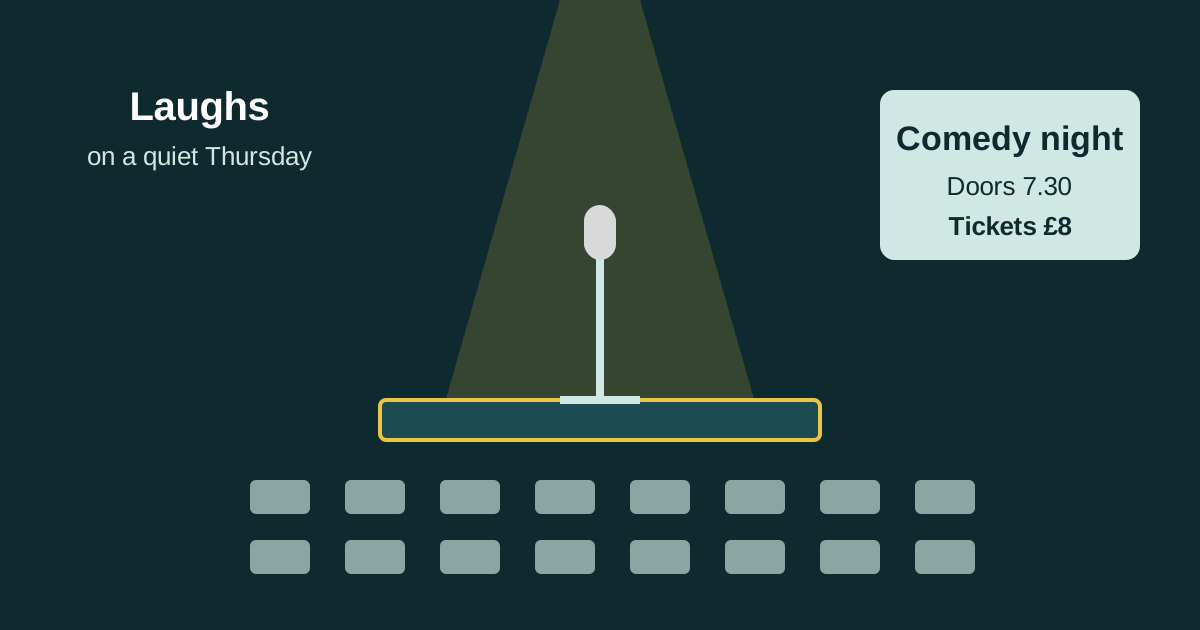
A comedy night is one of the few events that can fill a back room on a dead Thursday with people who've paid to be there. It's also one of the easiest to get wrong. Put a mic in the corner of a busy bar, let the fruit machine jingle away and you'll have three comedians dying on their feet and a room full of people talking over them.
This guide is how to run a comedy night in a pub properly: what the acts cost, how the room should look, how the night runs, the licensing (good news there), how to sell tickets and a worked sum so you know if it pays. Sources are at the bottom.
The short answer
- Book a good MC first. The compere holds the whole night together. Many will book the other acts for you.
- Use a room with a door that shuts, chairs in rows facing the act, a proper PA and a light on the performer.
- Run it in sections with intervals. That's when the bar takes its money.
- Stand-up comedy isn't regulated entertainment under the Licensing Act 2003, so you don't need extra licence permission for the comedy itself. Music is a different matter.
- Tickets of about £5 to £15 are normal for local nights. Start low and fill the room.
- Same night, every month. Comedy crowds are habit. Give it the best part of a year.
Is a comedy night right for your pub?
Be honest with yourself before you book anyone. Comedy needs three things most pubs don't have every night: a room where people can sit facing one way, quiet while the act is on, and a crowd who've come for it.
A comedian who has run nights in pubs told the Morning Advertiser that you shouldn't just put a mic in the corner and expect it to work. The event has to be the centre of attention. He also warned that Christmas and comedy don't mix, because office party crowds have been dragged out and don't really care who's on.
So a comedy night suits you if you've got:
- A function room or back room that seats somewhere between 40 and 80. One online promoter's guide calls a pub function room of that size with a door that closes the ideal start.
- A quiet night to fill. Thursday is the classic. It's not competing with your Saturday trade.
- Someone who'll own it. You, a member of staff or a promoter. It's a lot of work, and the nights that last have one person who cares about them.
If you've only got one open bar with the telly on, I'd be honest and say a quiz or race night will suit you better. Our guide on getting more customers on quiet midweek nights has the alternatives.
Who does what: three ways to run it
Every comedy night needs three jobs doing: booking the acts, selling and checking tickets, and getting an audience into the room. You can do them yourself or hand some to someone else.
1. You do it all
You book the acts, take the door money and promote it. Most money stays with you, but you need to know the circuit, and you'll spend a fair bit of time watching acts before you book them. A booking agent quoted by the Morning Advertiser reckoned pubs that do it themselves often end up "backing rubbish comedians or paying them over the odds".
2. An MC or promoter runs it, you keep the bar
This is the most common pub deal. The promoter takes the door money and books the acts, you provide the room and keep the bar takings. One promoter guide says most venues will take this deal if the promoter fills the room. A ticketing firm's guide describes the same model: the pub gives the room and basic sound for free in exchange for the bar.
3. An agency books it for a fee or a cut
An agency picks the acts and either charges a fixed fee or takes a percentage of ticket sales. Costs more, but you're not gambling on unknown acts. Good for a first night or a one-off.
For most pubs, I'd start with option 2. You're a landlord, not a comedy promoter. Let someone who knows the acts book them, and put your effort into the room and the bar.
What comedians cost
Comedians are usually grouped by experience. The ticketing site Tickts sets out typical UK fees for small venues:
- Open spots: new comedians doing 5 to 10 minutes. Usually free, and glad of the stage time.
- New acts: 10 to 20 minutes. Petrol money or £20 to £50.
- Middle acts: reliable 20-minute sets. £75 to £200.
- Headliners: 30 to 45 minutes to close the show. £150 to £500 or more for a small venue.
The MC is on top of that, and they're the one place not to scrimp. One promoter guide puts it bluntly: the MC makes or breaks the night, so pay a good one properly. A strong MC covers for a weak open spot and keeps the room warm between acts.
Don't overload the bill with free acts to save money. The same guide says three open spots is the maximum in a two-hour night. Four or more and the room gets restless before the headliner.
The room: set it up for laughing
Comedy is fussier about the room than almost anything else you'll put on. Get this bit right and average acts look good. Get it wrong and good acts struggle.
- Chairs in rows, facing the act. Not round tables where half the room has its back to the mic. Advice in the Morning Advertiser from 2008 still stands: lay out chairs facing forward and avoid circular tables.
- Smaller is better. Tickts makes the point well: 30 people in a room for 30 feels packed and electric, the same 30 in a room for 100 feels flat. Take chairs out rather than leave gaps.
- Clear sight lines. No pillar, no pool table, no telly in the way.
- A bit of height. Even a small riser of 15 to 20cm helps. The 2008 article reckons you can make a 6ft by 3ft stage with beer barrels and a plank, though I'd want something steadier than that these days.
- Light on the act, dark on the crowd. A couple of LED stage lights pointed at the mic and the house lights down. Tickts puts basic LED stage lights at about £30 to £60.
- A proper PA. One vocal mic on a stand into a decent small speaker does a room of up to about 80. Not the karaoke speaker from 1998.
- Kill the noise. Fruit machine sound off, jukebox off, background music off, and tell the bar staff the act is on.
Should you shut the bar during the acts?
The comedian quoted in the 2019 Morning Advertiser piece says yes: close the bar during the performances, so people stock up in the intervals and there's no clatter while someone's mid-joke. It sounds like it'll cost you money. In practice the intervals turn into a rush, and that's where the money is.
If you can't shut it, at least stop the till bleeping and the glasswasher running during sets.
How the night runs
A standard pub format looks like this. Times are a guide:
- 7.15pm: doors open. Give people 30 to 45 minutes to get a drink and settle. Most of your first round goes through the till now.
- 8pm: MC opens, warms the room up and sets the rules (phones away, no heckling).
- First section: an open spot or two and a middle act.
- First interval, 15 to 20 minutes. Bar rush. Simple food that doesn't need cutlery, if you do food.
- Second section: another open spot and a middle.
- Second interval.
- Headliner, 25 to 40 minutes.
- About 10pm: finish. People stay for a drink and talk about it.
One promoter guide suggests MC plus three open spots of 5 minutes, two middles of 15 minutes and a 25-minute headliner, about two hours with intervals. Don't skip the intervals. Every source I read says the same: the interval is where the venue makes its money.
Look after the acts
Pay them on the night, as agreed. Give them somewhere to sit before they go on, water, and a drink or a bite to eat. Send each act the running order and their set time the day before. Comedians talk to each other, and a pub that treats acts well gets better acts.
Licensing: what you do and don't need
This is the easy bit, but check the music side.
The comedy itself: the Home Office guidance issued under section 182 of the Licensing Act 2003 lists stand-up comedy as an example of entertainment that isn't licensable. So you don't need regulated entertainment on your premises licence to put on a comedian.
Music on the night: if you play walk-on music or have a band or DJ after, the same guidance says music that's incidental to another activity isn't regulated entertainment, but whether it's incidental depends on the facts, like whether it's advertised as the main attraction. Separately, GOV.UK's entertainment licensing page says live or recorded music in an alcohol-licensed pub between 8am and 11pm, for an audience of no more than 500, doesn't need a licence. Copyright is a different thing: any music you play still needs TheMusicLicence from PPL PRS. Our guide to music licences for quiz rounds and music bingo explains how that works.
After 11pm: GOV.UK says a licence may be needed for any entertainment between 11pm and 8am. Finish the show before 11 and you avoid the question.
Your own licence conditions: check your premises licence for noise conditions, and keep windows and doors shut. Material can be near the knuckle, so I'd make it 18+ and say so on the tickets.
I'm a landlord, not a lawyer. If anything about your licence is unclear, ring your council's licensing team.
Tickets: price, and how to sell them
Tickts says local comedy nights usually charge £5 to £15, depending on the acts and the area, and it's better to have a packed room at £5 than a half-empty one at £12.
- Sell in advance. You know how many chairs to put out, and the acts know what to expect. Keep a few for the door.
- Watch booking fees. A £7 ticket that becomes £8.50 at checkout annoys people.
- Expect late sales. A ticketing platform's guide says about 40% of comedy tickets sell in the last 72 hours. Don't panic on the Monday.
- If a promoter runs the door, agree in writing who takes what, before the first night.
Ticket money is charged VAT at the standard rate if whoever sells them is VAT registered, so if the door money goes through your till, ask your accountant.
A worked sum: does it pay?
Here's an example for a 50-seat back room on a Thursday, with you running it. These are illustrative figures, not anyone's real takings.
- Acts: MC £100, two open spots free, one middle £100, headliner £200. Total £400.
- Tickets: 50 at £8 = £400. The door pays the acts.
- Bar: say each person has three drinks at £4.50 across the night. That's 50 x 3 x £4.50 = £675 through the till, from a room that would have been empty.
- Food: if you sell chips and pizza in the interval, that's on top.
- Costs to watch: one extra member of staff for the door and the interval rush, and any lights or PA you buy the first time.
Now the bad night: 20 people turn up. The door takes £160 and you still owe the acts £400. That's why a promoter deal (they take the door risk, you keep the bar) is safer while you build a crowd.
Getting people in
The Morning Advertiser piece is honest: a comedy night isn't a quick fix, and it can take more than a year to become established. Plan for that.
- Same night every month. Last Thursday, forever. A promoter guide says random dates kill new nights.
- Manage expectations. It's not Live at the Apollo. Say "four of the best comedians on the North East circuit", not "big names".
- Use the acts. Tag them on Facebook and ask them to share. Their followers are your audience.
- Start promoting a few weeks out, then hard in the last week. A short clip from last month (with the comedian's permission) beats a poster.
- Put it on your screens and table talkers a fortnight ahead, and add it to your pub events calendar.
- Build a list. Ask ticket buyers if they want to hear about the next one, and keep their email consent on record.
Frequently asked questions
Do you need a licence for a comedy night in a pub?
Not for the comedy. Home Office guidance under the Licensing Act 2003 lists stand-up comedy as not licensable. Music you play still needs TheMusicLicence from PPL PRS, and entertainment after 11pm may need permission, so finish before then and check your premises licence conditions.
How much do comedians charge for a pub gig?
Tickts puts open spots at free, new acts at £20 to £50, middle acts at £75 to £200 and headliners at £150 to £500 or more for a small venue. Pay a good MC properly on top. Expect a full pub line-up to cost a few hundred pounds.
How much should I charge for comedy night tickets?
Local comedy nights usually charge £5 to £15. Start at the low end, sell in advance with no booking fee and fill the room. A packed room at £5 makes a better night, and a better next month, than a half-empty one at £12.
How many comedians do I need for a comedy night?
A compere plus three to five acts is normal: a couple of short open spots, one or two middle acts and a headliner, with one or two intervals. Keep open spots to three at most in a two-hour night or the room gets restless.
What's the best night for a pub comedy night?
A quiet midweek night, usually Thursday, at the same time each month. Avoid clashing with big football and avoid December, when office party crowds rarely listen. Comedy audiences are habit-based, so the regular slot matters more than the day.
Should I close the bar during the comedy?
If you can, yes, during the sets. Run proper intervals instead and people stock up then, so you don't lose sales and the acts aren't fighting the till and glasswasher. If you can't close it, keep it as quiet as you can.
Sources
- Morning Advertiser: How to set up a pub comedy night (2019)
- Morning Advertiser: Back to Basics: Hosting comedy (2008)
- Tickts: How to Run a Local Comedy Night
- Open Comedy: How to Run a Comedy Night, promoter guide
- Billetto: How to Host a Comedy Night
- Front Row Comedy: How to start a comedy night at your venue
- Home Office: Revised Guidance issued under section 182 of the Licensing Act 2003, chapter 16 (regulated entertainment)
- GOV.UK: Entertainment Licensing
We checked every source on 20 November 2026. Rules change, so check the latest version before you act. Nothing here is legal advice.