The landlord's blog Games and prizes
How to run a bingo night in a pub (the rules, the money, the night)
A landlord's step-by-step guide to a pub bingo night that fills a quiet midweek: tickets, calling, prices, the £5 and £2,000 rules, worked sums and a run sheet.
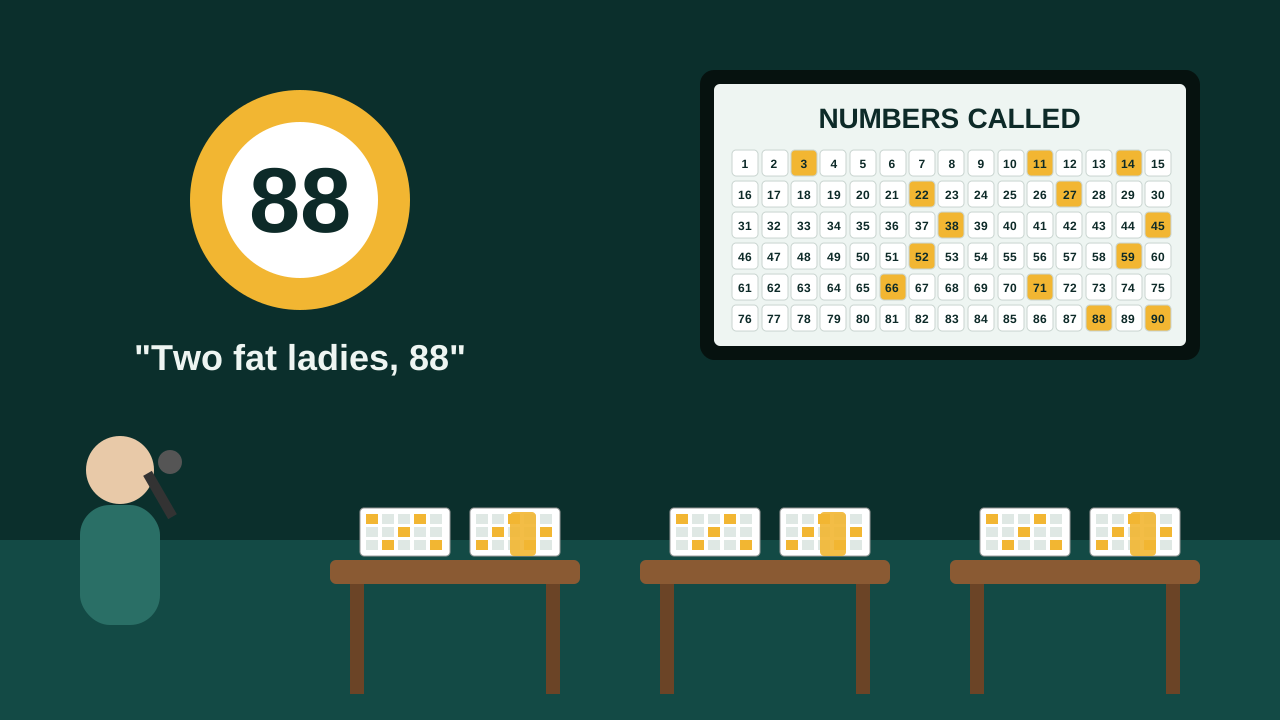
Bingo is one of the easiest nights a pub can put on. Everyone knows how to play. You don't need a quiz master who knows the capital of Peru. Your nan can win it, and so can the lad who's never been to a quiz in his life.
But a bingo night in a pub isn't the same as a bingo night in a church hall. Pubs have their own rules on stakes, prizes and money, and they're stricter than most people think. Get them wrong and you're running illegal gaming without meaning to.
This guide covers the lot: the rules in plain words, what to charge, how to split the prizes, the kit, calling, settling claims and a run sheet for the night. There's also a free printable bingo ticket maker if you want to skip buying ticket books.
The short answer
To run a bingo night in a pub in Great Britain:
- Keep every penny of the ticket money for prizes. The pub can't keep any of it.
- Charge no more than £5 per person per game. At £1 a ticket, that's five tickets each, tops.
- Don't charge to get in or to play. No entry fee, no "£3 to join the bingo".
- Adults only for any game with money on it.
- Keep a running total. Stakes or prizes over £2,000 in any seven days means you have to tell the Gambling Commission.
- Make your money on the bar and the food, not the bingo.
Those six points come from the Gambling Commission's rules for bingo as "exempt gaming" in alcohol-licensed premises. I've written a full guide to whether bingo is legal in pubs, including charity bingo and free games with prizes. None of this is legal advice. If in doubt, ring your council's licensing team.
Pick the type of night first
Before you print a single ticket, decide which of these you're running. The rules are different for each.
Cash bingo for adults. People pay for tickets, and all the ticket money goes back as prizes. This is the classic pub bingo night and it's covered by the exempt gaming rules above.
Free bingo, just for fun. Nobody pays and nobody wins anything but a cheer. That isn't gambling at all, so it's fine for families. It's what we'd run at a quiz break or a kids' afternoon.
Charity bingo. People pay and the profit goes to a good cause. A pub can't make a profit from exempt gaming bingo, not even for charity, so a fundraiser has to run under the separate non-commercial gaming rules. The legal guide explains how.
Themed or "social" bingo. Music bingo, drag bingo, rave bingo. These are big at the moment. The trade press says social bingo is growing across the licensed trade. The same money rules apply if there's a stake. Music bingo has its own licence questions, which I've covered in music bingo for pubs.
For the rest of this guide I'll assume you're running a cash bingo night for adults, because that's the one people get wrong.
How 90-ball bingo works (for the staff who've never played)
In Britain the normal game is 90-ball bingo. Your bar staff might not know it, so here's the 30-second version to read them before the night.
- Each ticket has 3 rows and 9 columns. Every row has 5 numbers and 4 blanks, so 15 numbers a ticket.
- The first column holds 1 to 9, the second 10 to 19, and so on. The last column holds 80 to 90.
- Tickets come in strips of six. A strip holds every number from 1 to 90 once, so someone with a full strip marks a number on every call.
- Each game has three prizes in order: one line (any full row), two lines (two full rows on the same ticket) and full house (all 15 numbers).
A line on one ticket and a line on another doesn't make two lines. That catches people out every time, so say it out loud before the first game.
What to charge and how to split the prizes
Here's where most pub bingo goes wrong. The pub's instinct is to charge £2 a ticket, put up a £50 prize and keep the difference. You can't do that. Every penny staked has to go back as prizes, and you can't charge a fee to take part.
The £5 limit is per person, per game. Poppleston Allen, the licensing solicitors, give the example of £1 cards: a player can buy no more than five for one game.
A worked example
Say 40 people turn up on a Wednesday.
- Tickets are £1 each, and on average people buy two per game. That's £80 staked per game.
- Split it 25% line, 25% two lines, 50% house: £20 for the line, £20 for two lines, £40 for the house.
- Six games in the night: £480 staked and £480 paid out.
The pub's take from the bingo is £0. The pub's take from 40 people sitting in for three hours on a Wednesday is the point. Even at a couple of drinks each, that's a night you wouldn't otherwise have.
Topping up the prizes
You're allowed to add prizes of your own on top of the stakes. Poppleston Allen say there's no limit on prize value for each game, and the pub can donate extra prizes beyond the stakes received. A £10 bar tab for the last full house, a meat hamper at Christmas, a bottle of fizz for the first-timer who wins. Those are fine.
But they count towards the £2,000. More on that below.
Don't bundle it with food
"£10 for a pie, a pint and your bingo tickets" sounds like a good deal. It's also a participation fee. The licensing solicitors writing in the trade press say putting food, drinks and bingo cards together for one price counts as a fee. Sell the pie and pint as normal, and sell the tickets separately.
The £2,000 in seven days rule
This is the one most landlords have never heard of. If the bingo played in your pub goes over £2,000 in any seven-day period, in either money staked or prizes given, that's "high turnover bingo". You have a legal duty to tell the Gambling Commission. If it happens a second time within a year, you need a bingo operating licence.
In our worked example, one night is £480. One night a week is fine. Four nights a week is £1,920, which is cutting it fine. Add a £100 Christmas prize on top and you're over.
So keep a simple log: date, games played, total staked, total prizes, including any extras the pub put in. Our free bingo ticket maker prints a caller's sheet with a box for each game's stakes and prizes, so it's one less bit of paper to make.
Kit list
You don't need much.
- Tickets. Ticket books from a party or cash-and-carry shop, or print your own. If you print, make sure they're proper 90-ball strips so every number is covered.
- Something to draw numbers. A ball cage and 90 balls is the classic. A bag of numbered counters works. Whatever you use, the draw has to be fair: every number with the same chance.
- A board for called numbers. A 1 to 90 grid the caller ticks off. You need it to check claims.
- Dabbers or pens. Have a pot of cheap pens on the bar for people who forget.
- A microphone. Even in a small pub. Half the arguments at bingo are "was that 13 or 30?"
- Somewhere to show the numbers. A whiteboard works. A TV showing the called numbers is better, because the back of the room can check without shouting.
- A cash tin and a float for ticket sales, kept apart from the till.
- The rules, written down. The Gambling Commission's code of practice says the rules of the game should be on display or available to players before and during the game. A laminated card on each table does it.
The Commission also says exempt gaming can't be played "virtually, or online in any way". For a cash game, keep it simple: paper tickets, numbers drawn and called in the room. If you want to use any app or screen for a game with money on it, ask your licensing team first.
Running the night
Before people arrive
- Brief the staff: who sells tickets, who checks claims, who keeps an eye on ages.
- Put the rules card on every table and the prize split on a board by the bar.
- Test the mic from the back corner.
- Have the log sheet and the called-numbers board ready.
Selling tickets
Sell tickets for each game before it starts, for cash. The code of practice says stakes should be paid before the game begins, with no credit. Don't let anyone buy more than £5 worth for one game. If someone wants six £1 tickets, the answer is five.
Check ages. The game must be adults only. The code says gaming should be in areas for adults, with staff checking anyone who looks under age, and refusing anyone without ID. Kids can't play the cash games, and a child shouldn't mark a ticket for a grown-up either.
Calling
A good caller makes the night. A bad one empties the room.
- Say each number twice. "Two and two, twenty-two."
- Keep a steady pace. Fast enough to keep it moving, slow enough that the person with three tickets keeps up.
- Use the old calls, sparingly. "Two little ducks, 22." "Two fat ladies, 88." "Top of the shop, 90." They're half the fun. Some of them go back to the First World War. Just don't let them slow things down, and remember a few have a bit of a reputation. Legs eleven gets wolf whistles, and some halls have banned players for it.
- Tick every number on the board as you call it.
- Announce which prize you're playing for. "We're on for the line." Then "Now for two lines." Then "All the way for the house."
PTA UK reckons a full game, line to house, takes 15 to 20 minutes. That's about right for a pub too. Six games plus a break fills a night.
Settling claims without a row
- When someone shouts, stop calling straight away.
- Read the claimed numbers back, out loud, against your board.
- If it's good, pay it there and then.
- If two people claim on the same number, split the prize. Decide that rule before game one, say it out loud, and stick to it.
- A late claim, after you've called the next number, doesn't count. Say that before game one as well.
Reading the numbers back in front of everyone is the bit that stops the arguments. Nobody can say it was fiddled when they've heard every number checked.
A run sheet for a Wednesday bingo night
- 7:00pm Doors and bar. Ticket sales open for game 1.
- 7:30pm Welcome, the rules, the prize split. Game 1.
- 7:50pm Game 2.
- 8:10pm Game 3.
- 8:30pm Break. 20 minutes for the bar and the toilets. Food out.
- 8:50pm Game 4.
- 9:10pm Game 5.
- 9:30pm Game 6, the big house, with any extra prize from the pub.
- 9:50pm Fill in the log. Thank everyone. Tell them the date of the next one.
The break matters more than the games. That's when the bar takes its money. If you want the room to hang about afterwards, finish with something that isn't bingo, like a quick quiz round or the football on.
Getting people through the door
Bingo fills the nights other things don't. It pulls in groups who'd never come to a quiz: mams' nights out, the over-60s, works teams. A few things help.
- Pick a night and keep it. Same day, same time, every week or every fortnight. People plan round it.
- Post the prize split, not just "bingo tonight". "£40 full house" is a reason to come.
- Push group bookings. A table of eight booked for bingo is eight people drinking for three hours.
- Make the first one easy. Explain the rules for beginners at the start of every night. Half your crowd won't have played since Butlins.
For more on filling quiet midweek nights, there's a whole guide on getting more customers in midweek.
Frequently asked questions
Do I need a licence to run bingo in my pub?
Not usually. If you hold an alcohol licence and stick to the exempt gaming rules (all stakes back as prizes, £5 per person per game, no fees, adults only, under £2,000 a week), the Gambling Commission says no licence is needed. Go over £2,000 in seven days a second time within a year and you'll need a bingo operating licence.
Can a pub make money from bingo?
Not from the bingo itself. All stakes must go back as prizes and you can't charge entry or participation fees. The pub makes its money from the extra drinks and food sold on the night.
How much can people pay for bingo tickets in a pub?
No more than £5 per person per game. At £1 a ticket, that's up to five tickets each for one game.
Can children play bingo in a pub?
Not in games with money on them. Under-18s can't take part in exempt gaming. A free game with no stake and no prize isn't gambling, so a family bingo afternoon just for fun is fine.
How long does a game of bingo take?
About 15 to 20 minutes for a full game with a line and a full house, according to PTA UK. Allow around 20 minutes a game, so six games and a break make a good two and a half hour night.
Can I charge an entry fee for a bingo night?
Not for the bingo. You can charge entry to a wider event, but people who only want to play bingo must be able to get in without paying. Bundling food or drink with bingo tickets for one price counts as a participation fee.
Sources
- Gambling Commission: Bingo as exempt gaming in pubs
- Gambling Commission: Guidance to licensing authorities, Part 18: Bingo in clubs and alcohol-licensed premises
- Gambling Commission: Code of practice, Section B: equal chance gaming in clubs and premises with an alcohol licence
- Morning Advertiser, Imogen Moss of Poppleston Allen (3 March 2025): The rise of social bingo in pubs
- Poppleston Allen: Pub bingo
- PTA UK: Step-by-step: bingo event
- Wikipedia: Bingo (British version)
- Wikipedia: List of British bingo nicknames
We checked every source on 11 November 2026. Rules change, so check the latest version before you act. Nothing here is legal advice.